
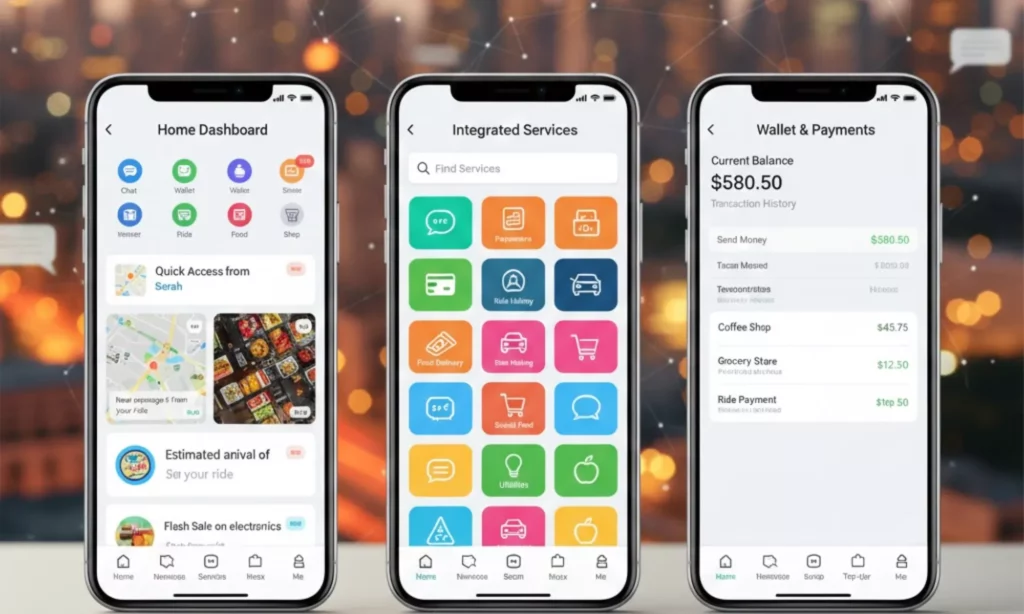

Mobile software has entered an era where raw novelty no longer impresses users. For years, the smartphone ecosystem operated on an iterative cycle: slightly faster chipsets, minor interface refreshes, and incremental camera updates. Today, user expectations have outgrown standard cosmetic polish. People no longer want passive tools that wait for manual input; they expect software that anticipates context, safeguards personal data by default, and operates seamlessly across screens of every shape and size.
Behind this shift is a profound convergence between Google’s Android and Apple’s iOS. While both platforms retain their distinct design philosophies and governance models, their trajectories have aligned around a common objective: transforming the smartphone from an app launcher into an ambient, highly capable personal operating environment. For engineering leaders, product designers, and founders, understanding these foundational shifts is no longer optional.
On-Device Intelligence and the Rise of Local Processing
The initial wave of mobile artificial intelligence relied almost entirely on remote cloud servers. Every prompt, image edit, or predictive calculation made a round trip to a data center, introducing latency, escalating server costs, and creating substantial privacy compromises. That architectural paradigm has broken wide open.
With modern system-on-chip architectures boasting dedicated neural hardware, mobile development is shifting aggressively toward on-device machine learning. Frameworks like Core ML on iOS and Android’s native machine learning stacks allow developers to run quantized neural models directly on the hardware.
This migration changes the fundamental dynamics of mobile utility:
-
Real-time execution: Tasks like live audio transcription, semantic object segmentation in photos, and predictive text completion execute with near-zero latency, even in airplane mode.
-
Radical privacy: Processing data locally means sensitive biometric patterns, private communications, and location histories never leave the device boundary.
-
Cost scalability: Moving inference from remote clusters to user devices dramatically lowers operational overhead for early-stage and enterprise teams alike.
Applications that treat local processing as their default architecture consistently outperform competitors on speed, reliability, and user trust.
The Extinction of Passwords Through Invisible Authentication
User friction has historically peaked at the login screen. Forgotten passwords, cumbersome SMS two-factor verifications, and brittle credential managers remain the single greatest cause of abandoned checkouts and drop-offs during onboarding. The industry-wide transition to cryptographic passkeys is finally resolving this decades-old design flaw.
Built on the FIDO alliance standards and deeply integrated into both Android and iOS system keychains, passkeys replace shared secrets with public-key cryptography. Instead of typing a password or waiting for a one-time passcode, users authenticate using on-device biometrics like Touch ID, Face ID, or fingerprint sensors.
Beyond passkeys, top-tier applications are deploying continuous behavioral authentication. By analyzing subtle, passive signals such as device angle, standard typing rhythm, and familiar network signatures, applications can dynamically evaluate session risk. If a banking app detects an anomalous location coupled with an irregular interaction pattern, it can quietly step up verification requirements without disrupting the day-to-day experience of regular users.
Contextual User Interfaces and Dynamic Micro-Interactions
Static navigation patterns—such as the ubiquitous five-tab bottom navigation bar—are gradually giving way to fluid, contextual interfaces. Users interact with their devices in fast, fragmented bursts throughout the day. Modern interfaces reflect this reality by prioritizing glancability and direct manipulation over multi-level menu navigation.
On iOS, features like the Dynamic Island and Live Activities have pushed real-time application states outside the app container itself. Android has matched this utility through richer lock screen widgets, persistent notification channels, and dynamic system surfaces. Whether a user is tracking a rideshare, following live flight updates, or monitoring an active timer, the interface now comes to them.
Modern mobile design is also stripping away visual clutter to combat cognitive overload. Designers are shifting toward gesture-first interactions, subtle haptic feedback loops, and typography-driven hierarchies that adapt based on the user’s physical environment. For example, high-contrast layouts trigger automatically under direct sunlight, while touch targets expand dynamically when an app senses the user is walking or navigating one-handed.
Unified Codebases Without Compromise
The historical debate between building purely native applications and adopting cross-platform frameworks has changed significantly. In earlier generations, choosing cross-platform often meant accepting clunky UI performance, delayed access to new operating system APIs, and bloated app bundles.
Today, modern development platforms have bridged that performance gap. Technologies like Kotlin Multiplatform allow engineering teams to write their core business logic, networking layers, and data persistence models once in shared code, while still crafting platform-native user interfaces in Swift for iOS and Jetpack Compose for Android.
At the same time, mature declarative UI frameworks like Flutter and React Native have refined their rendering pipelines to deliver fluid frame rates that closely match native rendering engines. This shift allows businesses to move faster and maintain parity across platforms without sacrificing the responsiveness that discerning mobile users expect.
Cross-Device Continuity and Ambient Computing
The smartphone is no longer an isolated computing island. Instead, it serves as the central hub of an expanding ecosystem that includes smartwatches, connected automotive consoles, smart home hardware, tablets, and spatial computing headsets.
Both Apple and Google are pushing architectures that make handoffs between devices frictionless. Health tracking applications no longer treat the smartwatch as an accessory; they design for wrist-first biometric collection that feeds deep analytics on the phone. Similarly, navigation and media applications must adapt their interfaces seamlessly between smartphone touchscreens, CarPlay or Android Auto dashboards, and voice-assisted home devices.
Applications designed solely for a six-inch vertical rectangle are rapidly falling behind. Successful development strategies now consider how digital experiences survive transitions across multiple physical touchpoints throughout a user’s day.
Designing for a Privacy-First Ecosystem
App development has permanently moved past the era of unrestricted background tracking. Operating system gatekeepers have implemented strict permission models, automated clipboard protections, temporary access tokens, and aggressive sandbox restrictions.
Building for modern platforms requires adopting privacy-by-design principles from the ground up:
-
Scoped data access: Rather than requesting broad access to an entire photo gallery or contact book, apps utilize system pickers that grant access strictly to user-selected items.
-
Minimalist telemetry: Engineering teams are cutting down extraneous background event tracking in favor of local diagnostics, keeping user sessions lean and preserving battery life.
-
Clear permission rationale: Successful apps avoid upfront permission barrages, instead asking for sensor access contextually at the precise moment a feature requires it.
Privacy has transformed from a legal compliance checklist into a direct brand differentiator. When software respects system resources and user autonomy, retention rates naturally rise.
Navigating the Road Ahead
The future of mobile technology belongs to products that balance technical sophistication with deliberate restraint. On-device processing, invisible security protocols, cross-device ecosystems, and fluid contextual interfaces represent more than just technical milestones. They mark a collective transition toward software that integrates naturally into human routines without demanding unnecessary attention.
For developers and product creators, the mandate is clear: focus on building software that is fast, respectful of user boundaries, and capable of delivering immediate value with minimal friction. The platforms are ready, the hardware is in place, and the users are waiting.

Comments are closed.