
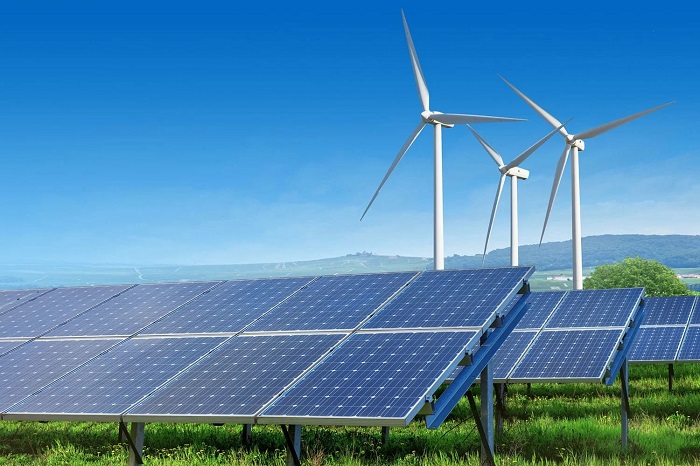

The global conversation around clean power has undergone a fundamental transformation. For years, the narrative centered almost entirely on parity: whether building a solar array or raising an onshore wind turbine could generate electricity as cheaply as burning fossil fuels. That economic hurdle has largely been cleared. Today, the core challenge has moved from raw generation to systemic integration, dispatchability, and industrial-scale decarbonization.
Meeting current energy needs without compromising environmental stability demands more than simply deploying more of yesterday’s technology. It requires solving the structural limitations of early clean tech: weather-dependent intermittency, geographic constraints, transmission bottlenecks, and the stubborn carbon footprints of heavy industry. Across materials science, subsurface geology, and advanced electrochemistry, a new generation of renewable technologies is emerging to address these exact choke points.
Perovskite Tandem Cells: Shattering the Photovoltaic Ceiling
Standard silicon photovoltaic panels have carried the modern solar revolution for decades, but they are rapidly approaching their theoretical efficiency ceiling. Known as the Shockley-Queisser limit, standard single-junction silicon cells cannot convert much more than twenty-nine percent of incoming sunlight into usable electricity, with real-world commercial panels typically operating between twenty and twenty-two percent.
The most viable answer to this thermodynamic plateau is the development of perovskite-silicon tandem solar cells. Perovskites are a class of synthetic materials engineered with a distinct crystalline structure that absorbs different spectrums of light than traditional silicon. When engineers stack a thin perovskite layer on top of a standard silicon base, the two materials work in concert: the perovskite absorbs high-energy blue and green wavelengths, while the underlying silicon layer captures the longer red and near-infrared wavelengths.
In controlled settings and early commercial manufacturing runs, tandem cells have pushed conversion efficiencies past thirty-four percent. That jump in output means commercial solar farms can generate significantly more megawatt-hours from the same acreage, cutting the land-use footprint and driving down balance-of-system costs like racking, cabling, and installation labor.
Deep-Water Floating Offshore Wind Turbines
Traditional offshore wind turbines are anchored directly into the seabed, restricting their deployment to shallow continental shelves that rarely exceed sixty meters in depth. This physical constraint leaves the world’s most energetic oceanic winds entirely untapped.
Floating offshore wind platforms bypass depth limitations by borrowing ballast and mooring engineering from deep-sea oil exploration. Instead of rigid steel pylons driven into the sea floor, these massive turbines rest on floating hulls anchored by tension legs and heavy-duty catenary mooring lines.
Operating in deep waters offers several decisive advantages:
-
Stronger, uninhibited wind velocities: Ocean winds encounter zero surface friction from terrain, blowing faster, more reliably, and across broader hours of the day than near-shore or inland drafts.
-
Minimal visual and acoustic disruption: Locating turbines tens of miles offshore keeps them well below the coastal horizon, resolving local permitting friction and avoiding sensitive coastal wildlife corridors.
-
Modular port construction: Floating substructures can be assembled, ballasted, and fitted with turbines at existing shipyards before being towed to sea, bypassing the need for specialized heavy-lift installation vessels.
As hull manufacturing transitions toward standardized modular steel and concrete designs, floating wind is opening expansive coastlines along the Pacific and North Sea to round-the-clock clean generation.
Long-Duration Energy Storage and Iron-Air Chemistries
A clean power grid cannot survive on weather-dependent generation alone. While lithium-ion batteries have revolutionized short-duration peaking needs, their economic and chemical viability drops sharply past the four- to eight-hour discharge window. A passing weather front or a prolonged seasonal dry spell demands storage architectures that can discharge continuously for days, not hours.
Beyond Lithium: Multi-Day Discharge Architectures
The frontrunner for utility-scale resilience is iron-air battery technology. Rather than relying on expensive, supply-constrained metals like nickel, cobalt, and lithium, iron-air systems operate on a basic chemical principle: reversible rusting.
During charging, an electrical current removes oxygen from rust (iron oxide), converting it back to metallic iron. During discharge, the battery breathes in oxygen from the ambient air, oxidizing the iron and releasing an electrical current. While iron-air cells are too heavy and bulky for electric vehicles, their physical footprint is irrelevant for utility substations. With the ability to discharge firm power for up to one hundred hours at a fraction of the cost of lithium-ion systems, iron-air installations offer a realistic safeguard against multi-day grid shortfalls.
Enhanced Geothermal Systems: Tapping the Earth’s Basal Engine
Geothermal power has historically been an exceptional source of clean, continuous baseload electricity, but it was historically limited to rare volcanic or tectonic anomalies where hot water sits naturally near the surface.
Enhanced Geothermal Systems (EGS) break that geographic restriction. By adapting horizontal drilling and hydraulic stimulation techniques developed in the oil and gas industries, engineers can now drill thousands of feet into impermeable, crystalline rock formations anywhere on the planet.
Once reaching ambient subsurface rock temperatures exceeding four hundred degrees Fahrenheit, pressurized fluid is injected to create a controlled network of micro-fractures. Cold water is then pumped down one well, circulates through the superheated rock network to absorb thermal energy, and returns to the surface through an extraction well as high-temperature steam that drives power turbines. Because EGS delivers uninterrupted, 24/7 generation independent of wind or sunlight, it serves as an ideal zero-emission baseload source for energy-intensive facilities like advanced manufacturing plants and data centers.
Clean Hydrogen for Hard-to-Electrify Heavy Industry
While passenger vehicles and domestic heating can be efficiently converted to direct electrical power, heavy industrial processes cannot be decarbonized through batteries alone. Manufacturing steel, refining chemicals, producing ammonia fertilizer, and powering long-haul cargo ships require enormous thermal energy density and specific chemical reactions.
This is where green hydrogen provides a bridge. Produced by splitting water molecules into hydrogen and oxygen using renewable electricity, green hydrogen releases zero direct carbon emissions during production or combustion.
Recent advancements in proton exchange membrane (PEM) and solid oxide electrolyzers have driven down the thermal energy losses that historically plagued water splitting. Solid oxide systems, in particular, capture and reuse waste heat from surrounding industrial operations to dramatically increase electrical conversion efficiency. By replacing fossil gas as a reducing agent in primary steelmaking and serving as a zero-carbon feedstock for maritime fuels, green hydrogen provides a clear pathway to clean up sectors that direct electrification cannot reach.
Grid Modernization and Dynamic Virtual Power Plants
The influx of decentralized energy assets—from residential rooftop solar and private home batteries to smart heat pumps—has overwhelmed distribution grids originally designed for one-way power transmission. Generating clean power is pointless if localized grid infrastructure cannot absorb or route it.
The operational answer is the rise of Virtual Power Plants (VPPs) governed by automated grid-edge software. VPPs aggregate thousands of independent, grid-connected consumer energy assets into a synchronized resource. Using machine-learning algorithms that analyze real-time wholesale power prices, local consumption habits, and incoming weather forecasts, these systems orchestrate energy dispatch in milliseconds.
When demand spikes, a VPP can quietly pull small amounts of reserve capacity from tens of thousands of idle residential batteries or briefly cycle down commercial refrigeration units. This eliminates the need to fire up carbon-heavy peaker plants while paying consumers for their flexibility.
Building the Cohesive Clean Energy Foundation
The true marker of progress in the renewable sector is the deliberate departure from single-technology thinking. No single breakthrough—whether an ultra-efficient solar panel, an offshore turbine, or an underground thermal loop—can power modern civilization alone.
The transition succeeds through the synchronization of these distinct systems. When high-yield solar and deep-sea wind are balanced by hundred-hour storage buffers, firm geothermal baseload, and intelligent grid balancing, clean energy ceases to be an intermittent alternative. It becomes the reliable, durable foundation of the global economy.

Comments are closed.