
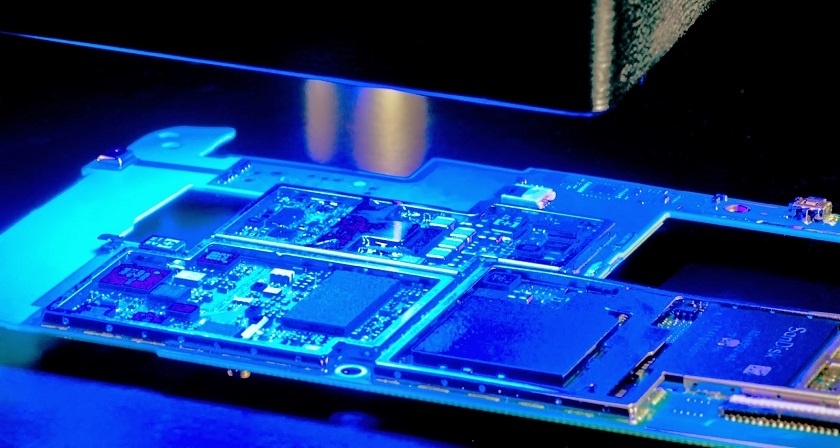

The Science Behind UV Curing: How It Works
The Role of Ultraviolet Light in Curing Processes
Ultraviolet (UV) curing is a process that employs ultraviolet light as a catalyst, triggering photochemical reactions to convert liquid materials into solid forms rapidly. This innovative method is pivotal across multiple industries, from manufacturing to printing, due to its efficiency and speed. By exposing substances to UV light, the energy emitted induces specific chemical reactions that allow for rapid solidification, thereby eliminating the need for traditional drying methods which can be time-consuming and resource-intensive. The overall effectiveness of UV curing is underpinned by the strategic use of tailored wavelengths of UV light, typically ranging from 200 to 400 nanometers, to optimize the curing process. This precision in wavelength selection ensures that the curing process is not only swift but also provides consistent results, crucial in high-demand production settings.
The Chemistry of Photoinitiators: Catalysts for Change
At the heart of UV curing technology lies the crucial component known as photoinitiators. These specialized chemical compounds act as catalysts, activating the polymerization process when exposed to UV light. Upon absorption of UV radiation, photoinitiators decompose to create free radicals or cations depending on their chemical structure. These reactive species then initiate the polymerization of monomers, resulting in the rapid formation of a three-dimensional cross-linked polymer network. This process is not only beneficial for achieving solid-state transformations at an accelerated pace, but it also allows for the creation of durable and resilient materials. Different types of photoinitiators are selected based on various factors, including the nature of the base materials, the required speed of curing, and the desired final properties of the cured product. As research continues to evolve in this field, new formulations of photoinitiators are being developed that enhance efficiency, minimize color change, and improve overall performance under specific application conditions.
Understanding the Polymerization Process: From Liquid to Solid
Polymerization is a fundamental chemical reaction wherein small molecular units, known as monomers, join together to form larger, more complex structures called polymers. In UV curing, this process is initiated by the reactive species generated from the photoinitiators upon exposure to UV light. As these radicals interact with the monomers, they create active sites that enable further reactions, leading to a rapid chain reaction that transforms low-viscosity liquids into solid materials within seconds. This transition can be attributed to two primary types of polymerization processes: free radical polymerization and cationic polymerization. Each method offers unique benefits and applications, allowing manufacturers to choose the most effective approach based on product specifications. Understanding the nuances of how polymerization works in UV curing is crucial for formulators and industries to tailor production processes and enhance product quality, while simultaneously maximizing production efficiency.
Applications of UV Curing: From Manufacturing to Art
Revolutionizing the Printing Industry: Vibrant Colors and Speed
The printing industry has undergone a significant transformation with the integration of UV curing technologies. Traditional printing methods often rely on solvent-based inks that require extensive drying times, limiting productivity and the range of applications. In contrast, ultraviolet curing fast-tracks the process, allowing printers to achieve high-quality results with vibrant colors and intricate details without the hazards of volatile organic compounds (VOCs). UV-cured inks are immediately dried when exposed to UV light, enhancing throughput and enabling rapid job turnaround. Additionally, the use of UV inks provides greater adhesion to various substrates, including plastics, metals, and textiles, expanding the capabilities of printers to tackle diverse projects. As the demand for personalized printing solutions rises, UV technology stands as an exemplary tool to meet these challenges while maintaining environmental compliance.
Transforming Coatings and Adhesives: Durability Meets Aesthetics
In the realm of coatings and adhesives, UV curing is proving indispensable for enhancing product performance and aesthetics. Manufacturers of paint, varnish, and protective coatings benefit from the rapid curing capabilities, which allows for immediate handling and processing post-application. UV-cured coatings exhibit exceptional hardness, chemical resistance, and weatherability, making them suitable for a plethora of industrial applications, from automotive to electronics. Furthermore, the precision involved in UV curing allows for the development of high-gloss, matte, or textured finishes, catering to diverse consumer preferences and industry standards. Adhesives formulated with UV-curable components also showcase superior bond strength and quick setup times, which is crucial in assembly lines and various manufacturing scenarios where efficiency is paramount. As product innovation continues, the intersection of aesthetics and functionality in UV-cured coatings and adhesives is set to drive industry standards forward.
Emerging Trends in 3D Printing: Infusing UV Curing Technology
UV curing technology is also making significant strides in the realm of 3D printing, revolutionizing the additive manufacturing landscape. The advent of UV-curable resins has enabled faster production of intricate 3D objects that maintain high fidelity and durability. In traditional 3D printing techniques, components may require long post-processing times, but UV curing can dramatically reduce this duration, allowing for almost instantaneous solidification of the printed layers. As a result, industries ranging from healthcare, wherein tailored prosthetics are produced, to aerospace, where lightweight and robust components are crucial, are leaning towards UV curing methods. Furthermore, advancements in materials science continue to expand the array of UV-curable resins, enhancing the mechanical properties and thermal resistance of 3D printed products. As technology matures, the integration of UV curing within 3D printing processes presents immense potential for innovation across multiple sectors.
Benefits of UV Curing: Efficiency Meets Sustainability
Faster Production Times: Cutting Down on Downtime
The efficiency gained through UV curing translates directly to reduced production times, a critical advantage in today’s fast-paced manufacturing environment. By minimizing drying times and allowing for immediate handling of cured products, manufacturers can significantly enhance output without the need for intermediate processes. In sectors such as automotive assembly or electronics manufacturing, where every minute of machinery downtime equates to cost implications, the adoption of UV curing technologies equips companies to maintain continuous workflow and increase throughput. The inherent speed of UV curing not only helps to streamline production schedules but also facilitates the processing of large volumes with consistency in quality. As industries continuously seek solutions to boost operational efficiency, the ability to implement faster-curing processes becomes a differentiator in a competitive landscape.
Reducing Environmental Impact: The Green Credentials of UV Technology
Environmental sustainability has become a paramount concern for industries looking to adopt cleaner technologies. UV curing emerges as a frontrunner in this regard due to its compatibility with sustainable practices. This technology significantly reduces solvent usage, which is a primary contributor to air pollution and VOC emissions. By transitioning from traditional solvent-based systems to UV-curable formulations, companies can not only meet stringent environmental regulations but also enhance their corporate responsibility profile. Moreover, UV curing generates less waste, as unmixed materials remain uncured and thereby can be reused. The ability to cure materials quickly also means less energy consumption overall, allowing industries to decrease their carbon footprints while still delivering high-quality products. As consumers increasingly demand eco-friendly products, UV curing positions businesses well to cater to these evolving market expectations.
Enhanced Product Performance: Quality That Lasts
One of the most compelling benefits of UV curing is the superior performance characteristics of the resulting products. UV-cured materials typically exhibit exceptional hardness, resistance to chemicals, and durability, making them preferable in demanding applications that require longevity and reliability. The cross-linking of polymers achieved during the UV curing process results in materials that can withstand the wear and tear of everyday use, from deck coatings that resist scratching to adhesives that maintain strong bonds under stress. Additionally, improved resistance to UV-light degradation itself ensures that products retain their aesthetic appeal and functional capabilities over time. Manufacturers and consumers alike appreciate products that last longer, as this not only enhances satisfaction but also aligns with the principles of sustainability—investing in durable goods reduces the frequency of replacement and, by extension, resource consumption.
The Future of UV Curing: Innovations on the Horizon
Advancements in Equipment: The Next Generation of UV Systems
The future of UV curing is bright, driven by continuous advancements in equipment and technology. Next-generation UV systems are being developed to cater to an even more extensive range of materials and applications. Innovations such as LED UV systems are revolutionizing the sector by providing energy-efficient alternatives that offer longevity and flexibility in curing operations. Unlike traditional mercury-based systems, LED-curing units produce less heat and have significantly lower operational costs, making them an attractive choice for manufacturers. Additionally, ongoing research into optimizing curing mechanisms aims at improving energy efficiency further while enhancing curing speed, allowing industries to adapt to growing market demands and stay ahead of competition. These equipment innovations promise not only improved performance but also expanded capabilities in material diversity, catering to complex substrates and formulations that could unlock new industrial possibilities.
Integration with Smart Technologies: UV Curing in the IoT Era
The advent of the Internet of Things (IoT) is paving the way for smarter manufacturing processes, and UV curing is no exception. Integrating UV curing systems with IoT technologies facilitates real-time data collection and analysis, enabling manufacturers to optimize curing parameters dynamically. This capability ensures that materials are processed under ideal conditions, minimizing the risk of defects and enhancing overall quality. Predictive maintenance powered by connected sensors can also reduce downtime; manufacturers are alerted to potential failures before they occur, leading to smoother operations. Additionally, as companies increasingly look towards Industry 4.0, the incorporation of UV curing into fully automated and digitally controlled production environments will serve as a critical component of resilience and adaptability. The road ahead shows great promise for the convergence of UV curing technology with intelligent systems, creating more efficient, responsive, and scalable manufacturing processes.
Expanding Markets: Where Will UV Curing Take Us Next?
As UV curing technology continues to mature, new markets and applications are set to emerge, further expanding its influence across various industries. Non-traditional sectors such as medical devices, cosmetics, and packaging are beginning to recognize the benefits of UV curing methods, leading to a surge in demand for specific formulations tailored to meet their unique requirements. For instance, the rise of sustainable packaging solutions has led to increased interest in UV-cured coatings that enhance barrier properties while reducing the environmental footprint. Furthermore, the ongoing pandemic has brought about a shift towards hygiene-focused products, which are increasingly adopting UV-cured finishes that offer resistance to microorganisms. As research progresses and methodologies evolve, UV curing holds the potential to reach into realms yet undiscovered, reinforcing its status as an innovative cornerstone in modern manufacturing.
FAQ
Question: What industries can benefit from UV curing technology? – UV curing technology can benefit a wide range of industries including printing, automotive, electronics, medical devices, cosmetics, and packaging, among others.
Question: How does UV curing compare to traditional drying methods? – UV curing is significantly faster than traditional drying methods, as it can transform liquid materials into solid forms almost instantly, reducing overall production times and enhancing efficiency.
Question: Are there any safety concerns associated with UV curing? – While UV curing is generally safe, precautions are necessary due to UV radiation exposure. Proper protective equipment and safety measures should be in place to minimize exposure risk during the curing process.
Question: Can UV curing be used for all types of materials? – UV curing technology is highly versatile; however, not all materials are suitable for UV curing. Compatibility depends on the specific formulation of the materials being used.
Question: What are photoinitiators and why are they important? – Photoinitiators are chemical compounds crucial to the UV curing process as they activate polymerization when exposed to UV light, leading to the quick conversion of liquid materials into solid polymers.
Question: How does UV curing contribute to sustainability? – UV curing reduces environmental impact by decreasing solvent use, minimizing waste, and consuming less energy compared to traditional processes, making it a more sustainable choice for manufacturers.
Question: What advancements are expected in the field of UV curing? – Future advancements may include energy-efficient LED UV systems, improved material formulations, and enhanced integration with smart technologies for better monitoring and control of curing processes.
Question: What is the significance of the polymerization process in UV curing? – The polymerization process is essential in UV curing as it transforms monomers into cross-linked polymers, which results in durable and resilient materials crucial for various applications.
Useful Resources
- American Chemical Society
- American Physical Society
- ScienceDirect
- Elsevier
- The Royal Society
- International Union of Pure and Applied Chemistry (IUPAC)
- Materials Chemistry
- 3D Printing Industry

Comments are closed.