
Redefining the Smart Ring: How Wearable „Ring Form“ Gadgets Are Shaping 2025’s Tech Landscape

Introduction
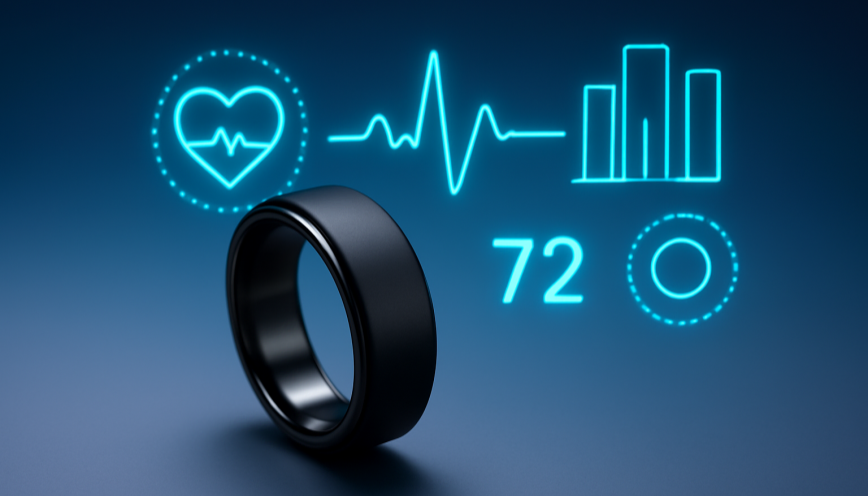
In the crowded world of wearable gadgets, the humble smart ring is emerging from the shadows. As we step deeper into 2025, ring-form wearables—once a niche novelty—are becoming serious tools for wellness, productivity, and ambient connectivity. This article explores how these devices are evolving, what’s driving their relevance, and why you might want to take a closer look at what’s encircling your finger.
Why the Smart Ring Matters Now
From Wrist to Finger
Wearables have long been dominated by smartwatches and fitness bands. Yet recent research suggests a shift toward more discreet, less intrusive form factors. For example, an academic survey on “earable” devices highlights how wearables are migrating toward everyday accessories that fade into the background. arXiv+1 Smart rings are appealing because they:
-
Occupy a familiar accessory slot (the finger)
-
Offer high convenience (less bulk than a watch)
-
Are more socially subtle (less visually conspicuous than a smartwatch)
Technological Tailwinds
Three key trends are fueling the rise of ring-form wearables:
-
Miniaturised sensors and processors: Advances in low-power electronics allow full functionality in ever-smaller packages.
-
Ambient intelligence and context-aware systems: According to a tech trend-analysis report, we’re moving toward “ambient invisible intelligence” in devices. Gartner+1
-
Wearable health and biometric monitoring: Rings can capture heart rate, SpO₂, temperature and more with less effort than bulky devices.
What’s New in Smart Rings for 2025
Enhanced Health Monitoring
Unlike earlier models that focused on step-counting, today’s smart rings can monitor:
-
Sleep stages (light, deep, REM)
-
Heart rate variability (HRV)
-
Body temperature trends
-
SpO₂ and respiratory rate during sleep
The combination of these metrics creates a richer wellness profile without the need to strap something large onto your wrist.
Seamless Connectivity & Control
Smart rings are not just about tracking—they’re becoming smart control hubs. Features include:
-
Ambient notification alerts (vibration/haptics)
-
Smart home device control (lights, blinds, music)
-
Gesture control via finger taps or swipes
These capabilities make them a silent companion—always on the finger, always ready.
Durability & Discreet Style
Manufacturers are refining their designs:
-
Longer battery lives (thanks to smaller displays or no display)
-
Robust build materials (ceramic, titanium, scratch-resistant coatings)
-
Water resistance for all-day wear, including sauna and shower
This transformation makes smart rings viable for continuous wear: during sleep, workouts, work and rest.
Empowered by Artificial Intelligence
AI plays a growing role. Smart rings can:
-
Learn your sleep and recovery patterns and offer insights
-
Detect deviations (e.g., elevated resting HR) and flag potential health risks
-
Provide predictive insights (e.g., when you’re likely to feel fatigued)
These advanced features align with the broader trends of human-machine collaboration and digital assistive systems. McKinsey & Company+1
Use-Cases Worth Understanding
Recovery & Performance for Active Users
For fitness enthusiasts or professionals, smart rings deliver:
-
Real-time recovery scores that update based on HRV and sleep quality
-
Alerts when you’re overtraining (high resting HR + low HRV)
-
Guidance suggesting when to push and when to rest
Because the ring remains unobtrusive, it eliminates the need to pair a watch and other sensors.
Corporate Productivity & Alertness
In professional mindsets, smart rings offer unique benefits:
-
Subtle taps/alerts reminding you to stand, hydrate or shift focus
-
Light haptic nudges during focus sessions (so you don’t rely on your phone)
-
Privacy: Unlike smart glasses or watches, rings are less distracting and less obvious as data-collection devices
Sleep & Lifestyle Insights
Sleep might be the biggest value:
-
Gather multi-night data to analyse trends (for example, how caffeine or late dinners affect your sleep)
-
Ring-tracked data can pair with apps to issue personalised lifestyle recommendations
-
Silent alerts if patterns suggest a health issue (perhaps warranting further investigation)
Challenges and What to Watch For
Battery Life vs. Functionality
Although miniaturisation has improved, trade-offs remain:
-
Rings with large sensor suites or advanced connectivity still need frequent charging.
-
Users accustomed to days of use on smartwatches may feel the difference.
Data Privacy and Interpretation
With intimate biometric data comes responsibility:
-
Who owns the data stored by the ring manufacturer?
-
How accurate are the predictive algorithms, and could they cause unnecessary anxiety?
Manufacturers will need to strike a balance between insight and over-notification.
Comfort and Fit
A ring must be comfortable and sized correctly:
-
Poor fit may compromise sensor accuracy (e.g., heart rate)
-
Some users may resist wearing something all the time on their finger (for example, if they prefer bare hands for manual work or prefer minimal accessories)
Cost and Feature Breadth
Higher-end models are still premium-priced:
-
Entry-level rings may omit advanced sensors or AI features
-
Consider whether you really need every function—or whether a simpler model suffices
Looking Ahead: What Comes Next
Multi-Function Rings
The next generation could merge more capabilities:
-
Payments (NFC built-in)
-
Keyless entry (homes, cars)
-
Personalised ambient control based on location and activity
In short: rings that are not just wearable gadgets but central to our personal infrastructure.
Modular and Upgradable Designs
Following trends in sustainability, future rings may:
-
Allow sensor modules to be replaced or upgraded
-
Use recyclable materials or honour circular economy principles
Such moves align with broader technology trends toward energy-efficient computing and modular design. Gartner+1
Wider Integration into Smart Environments
Smart rings will increasingly become nodes in the Internet-of-Things (IoT):
-
Syncing with smart home devices, cars and public infrastructure
-
Acting as identity tokens for seamless friction-free interaction (e.g., unlocking doors, logging into computers)
We might shift from accessing the world via phones to accessing it via wearables on our body.
How to Evaluate Smart Rings for Yourself
Before purchasing, consider the following checklist:
-
Sensor suite: Does it cover the metrics you care about (HRV, sleep, SpO₂)?
-
Comfort & design: Will you wear it all day and night?
-
Battery/charging cycle: Is the recharge interval acceptable?
-
Data ecosystem: Does the companion app provide meaningful insights (not just raw numbers)?
-
Data privacy & export: Can you access your data, export it, or integrate with third-party apps?
-
Upgrade path & ecosystem support: Is the manufacturer committed to long-term support and firmware updates?
Conclusion
As wearable technology evolves, ring-form devices are carving out a powerful niche. They combine subtlety with sophistication, offering continuous health monitoring, ambient control, and seamless connectivity without the bulk and attention of larger wearables. For those who prioritise minimalism, uninterrupted data capture, or performance-driven insights, smart rings are more than a trend—they’re a meaningful evolution in how we wear, interact with, and derive value from our gadgets.
If you’re ready to move beyond generic smartwatch fare, a smart ring may just be the ring-powered leap forward you’ve been waiting for.
FAQ
Q1: Can a smart ring really measure heart rate as accurately as a smartwatch?
Yes—many modern smart rings use optical sensors and algorithms similar to smartwatches. However, accuracy may still depend on fit, user movement and sensor design.
Q2: How long will I have to charge a smart ring between uses?
Charging intervals vary widely depending on model and functionality. Some rings last 3–5 days, others up to a week. Models with richer sensors may need more frequent recharging.
Q3: Will wearing a smart ring all night give useful sleep data?
Absolutely. One of the core advantages of smart rings is continuous wear. Tracking sleep stages, HRV overnight and body temperature enables richer insight than occasional use.
Q4: Are smart rings waterproof? Can I wear one in the shower or swim?
Many modern rings are water-resistant (e.g., suitable for showering), but not all are swim-proof. Always check the manufacturer’s specifications and sealing ratings.
Q5: What about data privacy—who owns the biometric data collected by a smart ring?
Ownership depends on the manufacturer’s policy. Ideally you should have the option to export your data, control sharing permissions and delete your data if desired. Always review the privacy policy.
Q6: If I already have a high-end smartwatch, is a smart ring worth it?
It depends on your needs. Smart rings are designed for minimalist wear, constant usage, and subtle alerts—features that smartwatches may lack or that you may prefer to offload. If you value discreet wear and continuous monitoring, then yes, it can be worth adding.
Q7: Are there any hygiene or comfort issues with wearing a ring all the time?
Potentially yes. Ensure the ring fits well (not too tight or too loose), clean it regularly (sweat/oil can accumulate), and remove if irritation occurs. Long-term comfort varies by design and your finger size/activity.

Comments are closed.