
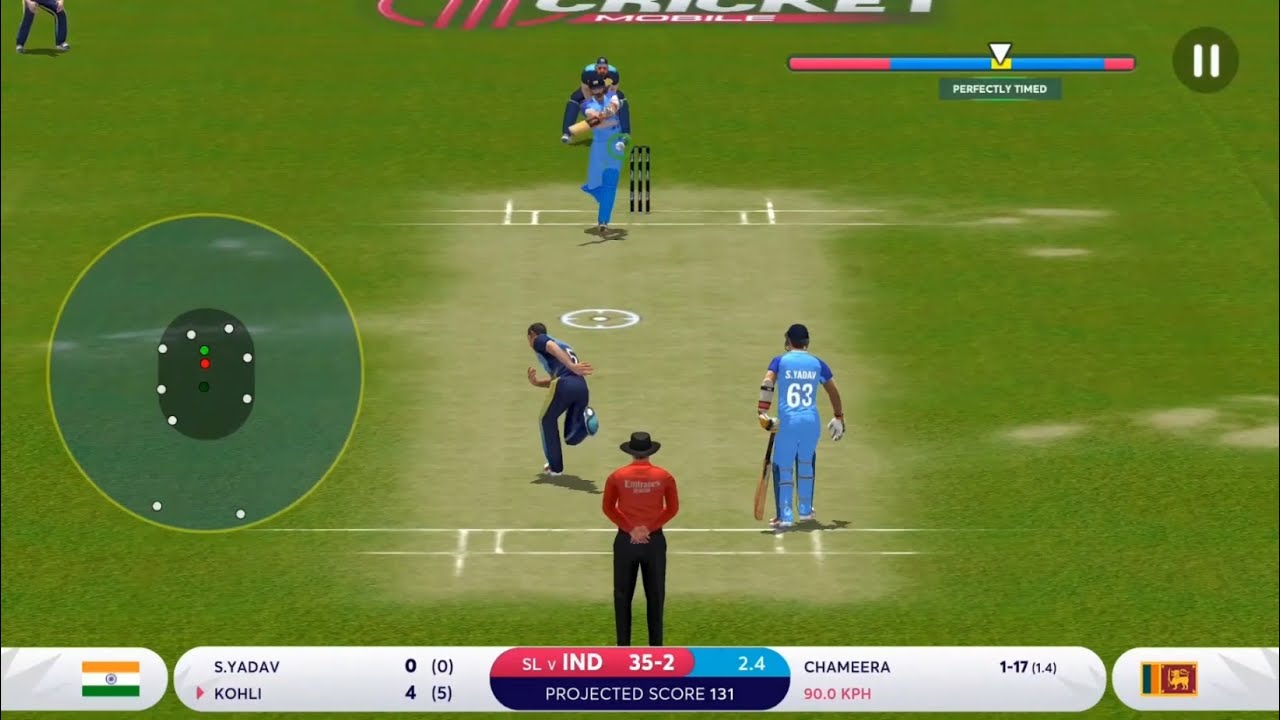

Mobile cricket games were once built around simple actions, mostly limited to two keys. Players selected a shot, watched the ball travel and moved quickly to the next delivery. The experience was enjoyable, but there was limited control over placement, fielding and match strategy.
Today, a cricket app can offer far more involvement. Players are expected to read deliveries, select scoring areas and remain alert while fielding. An online cricket game can also place them against real opponents, making every match less predictable than a contest against fixed computer behaviour.
From Simple Tapping to Thoughtful and Strategic Applications
When online cricket games and cricket apps first gained attention, quick controls were often enough to keep players interested. However, cricket fans gradually began expecting more than repeated taps and a small collection of shots.
Well, think about batting in the actual sport. A batter does not use the same stroke against every ball. Pace, length and direction influence the response. Mobile simulations have followed a similar path by giving players more choice and greater responsibility.
The result is a batting experience where timing and placement matter alongside power.
Greater Control Over Shot Direction
Have you ever timed a shot well but still sent the ball towards a fielder? This is where modern control systems have changed the experience.
A shot map allows players to choose the intended scoring area instead of depending completely on automatic direction. Saved batting presets can also reduce hesitation by keeping preferred shot combinations ready for different situations.
These developments make a cricket app feel more organised. The player can prepare an approach, observe the delivery and then decide whether the plan still suits the moment.
Fielding Became Part of the Experience
Earlier mobile cricket games often placed most of the attention on batting and bowling. Fielding actions were commonly treated as something happening in the background.
Modern cricket simulations give players a more active role. Manual pickups, catches, throws and direct-hit attempts mean that concentration cannot end once the ball leaves the bat.
This change is important because close matches are not decided only by boundaries. One completed catch or accurate throw can influence the result.
Multiplayer Changed Player Behaviour
Playing against a fixed system can become familiar after several matches. A human opponent behaves differently. They may repeat a successful delivery, change pace unexpectedly or recognise a player’s favourite shot.
This has made the online cricket game experience more tactical. Players must identify patterns, hide their own habits and adjust when an opponent changes approach.
Ranked and unranked options also allow players to move gradually from relaxed matches towards more competitive contests.
Bringing Modern Cricket Gaming Together
Modern cricket games have evolved to offer significantly greater depth and player control as compared to earlier games. Popular cricket apps such as Real Cricket™ showcase this shift by incorporating features like a wide range of batting shots, shot maps, batting presets, manual fielding and real-time multiplayer modes.
Instead of relying simply on quick reflexes, players are encouraged to make tactical decisions, adapt to different match situations and refine their gameplay, which makes the overall experience more immersive and engaging.
Final Overview
The evolution of mobile cricket simulation has been shaped by one clear demand, i.e., players want greater involvement.
Simple tapping has gradually made way for shot selection, placement, fielding control and multiplayer strategy. Hence, modern mobile cricket is no longer only about watching the action. It is about reading the match, making decisions and taking responsibility for what happens next.

Comments are closed.